01Auth
Authentication and access
Make sure only the right people get in, with only the rights they need.
- Multi-factor authentication
- Secure sessions and password hashing
- Roles, policies and permissions
- Access review and cleanup
Most breaches don’t need a genius attacker. They need a forgotten plugin, a weak login or a server nobody updated. I close those doors in your application and on your server, and build security in from the start, where it’s cheapest.
Measured on client work at Santandrea Top Properties, Shine Software.
01 / Why it matters
Security is cheapest before anyone needs it.
Most attacks aren’t clever. Automated bots scan millions of sites for the same things: outdated plugins, default passwords, login forms with no limits, servers nobody has patched.
A breach costs more than the fix. Downtime, cleanup, lost rankings if Google flags your site, and lost trust from customers who gave you their data. Under the GDPR, a breach involving personal data can also bring reporting duties.
I build security into the application and the server, where it’s cheap, instead of bolting it on after an incident, where it’s expensive.
And because I write the code too, the fixes fit your application instead of fighting it.
02 / Signs
Your site runs on themes and plugins that haven’t been updated in months, or years.
Your logs show thousands of login attempts from countries you’ve never sold to.
No one can say when it was last patched, or who still has access.
Accounts, bookings, payments or forms full of names, emails and addresses.
Spam pages, a blacklisted domain or a defaced homepage, and you’re not sure it’s really gone.
There are backups, probably, but nobody has ever tried restoring one.
03 / What I secure
Security is a chain, and attackers look for the weakest link. I work across the application, the server and the edge, so there’s no gap between the developer’s part and the hosting part.
Make sure only the right people get in, with only the rights they need.
Slow down brute force, scraping and form spam.
Close the common holes in code before attackers find them.
A server that offers attackers nothing to work with.
Encrypted everywhere, and browsers told how to protect visitors.
When something does go wrong, get back fast.
04 / Process
Code, configuration and server reviewed, with automated scans and manual checks for what scanners miss.
You get A risk report in plain language.
The issues that could hurt you most, and are easiest to exploit, go first.
You get A ranked fix list.
Fixes shipped in small, reviewed changes, then verified, so protection never breaks the site.
You get Doors actually closed.
Updates, monitoring and periodic reviews, because security decays when nobody looks.
You get Protection that lasts.
05 / Case study
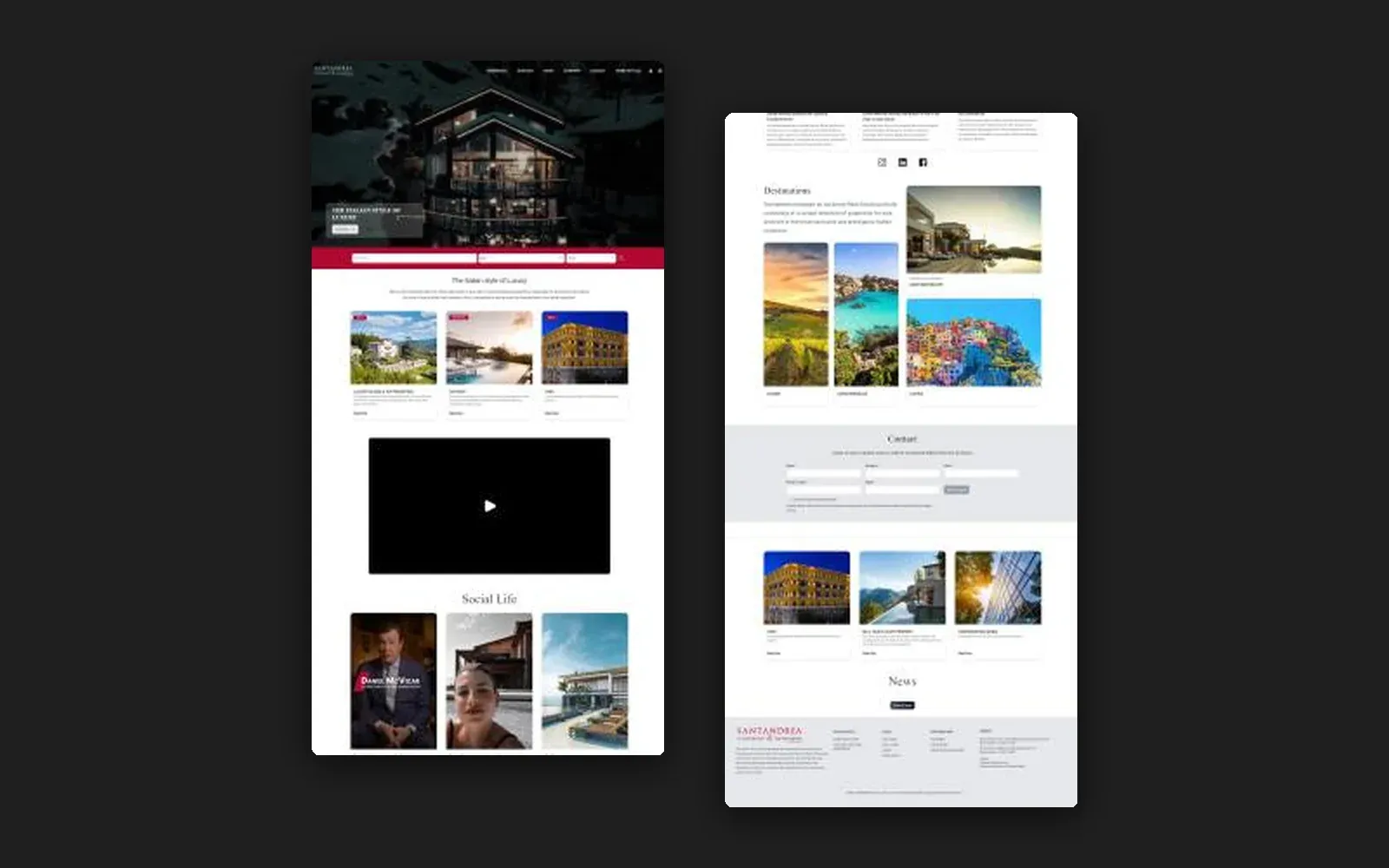
A property booking platform takes accounts, enquiries and personal details from visitors every day. Alongside the performance work, I hardened the login flow and the server configuration, so the platform stayed fast without leaving doors open.
“Masih provided quick and thorough server management, improving my site’s security, and providing options for further site development.”
06 / Ways to work together
For teams who want to know where they stand.
A review of your application, configuration and server, delivered as a risk-ranked list your developers can act on.
For teams who want the doors actually closed.
Everything in the review, then I fix it myself: authentication, rate limiting, headers, server hardening and backups.
For sites that must stay safe as they change.
Regular updates, monitoring and reviews, so new code and new threats don’t quietly reopen what was closed.
07 / Toolkit
08 / FAQ
Common signs: pages or links you didn’t create, spam showing in Google results for your domain, redirects to other sites, unknown admin accounts, browser or Google warnings, and sudden spikes in server load. If you see any of these, write to me and don’t wait.
I do security reviews and hands-on hardening of your application and server. If you need a formal penetration test or a compliance certificate, I’ll recommend a specialised firm and fix what they find.
WordPress core is well maintained. Most WordPress breaches come from outdated plugins and themes, weak admin logins and neglected servers. All of those can be fixed and kept fixed.
I put the technical measures in place: encryption in transit, access control, minimal data collection, secure backups and logging. For legal advice on your obligations, talk to a privacy lawyer or your DPO. I’m not a lawyer.
Yes. Contain the damage, clean the site, restore from a known-good state, find how they got in, and close that door so it doesn’t happen again.
Yes. I’m based in Milano and work with teams in Italy and abroad, fully remotely, in English.
10 / Next step
Tell me what your site runs on and what worries you. If you think you’ve been hacked, say so in the subject and I’ll prioritise it.
Or write directly: masih@masihtak.dev